
The acquisition of United States citizenship through the process of naturalization is a rigorous administrative and legal procedure governed by the Immigration and Nationality Act (INA). This transition from lawful permanent residency to citizenship involves strict adherence to federal regulations, comprehensive background evaluations, and the successful completion of standardized examinations. Naturalization confers significant legal rights, including the right to vote in federal elections, the ability to sponsor family members for immigration, and eligibility for a U.S. passport.
This guide provides a definitive overview of the requirements, procedural steps, and compliance mandates necessary for a successful naturalization application in 2026.
Statutory Requirements for Naturalization
To qualify for naturalization under standard provisions, an applicant must satisfy specific statutory criteria. Failure to meet any of the following requirements will result in the summary denial of the application.
- Age Requirement: The applicant must be at least 18 years of age at the time of filing Form N-400.
- Lawful Permanent Residency: The applicant must be a Lawful Permanent Resident (LPR) for a minimum of five years. This period is reduced to three years for individuals who have been married to and living with a U.S. citizen for the duration of that period.
- Continuous Residence: The applicant must demonstrate continuous residence in the U.S. for the required three or five-year period. Brief trips abroad are generally permitted, but absences exceeding six months may disrupt the continuity of residence.
- Physical Presence: The applicant must be physically present in the United States for at least 30 months out of the five years (or 18 months out of three years for those applying via marriage) immediately preceding the application date.
- Jurisdictional Residency: The applicant must have resided for at least three months in the state or service district where the application is filed.
- Good Moral Character: The applicant must demonstrate good moral character (GMC) during the statutory period. This assessment includes an evaluation of criminal history, tax compliance, and honesty during the immigration process.

The Application Phase: Form N-400
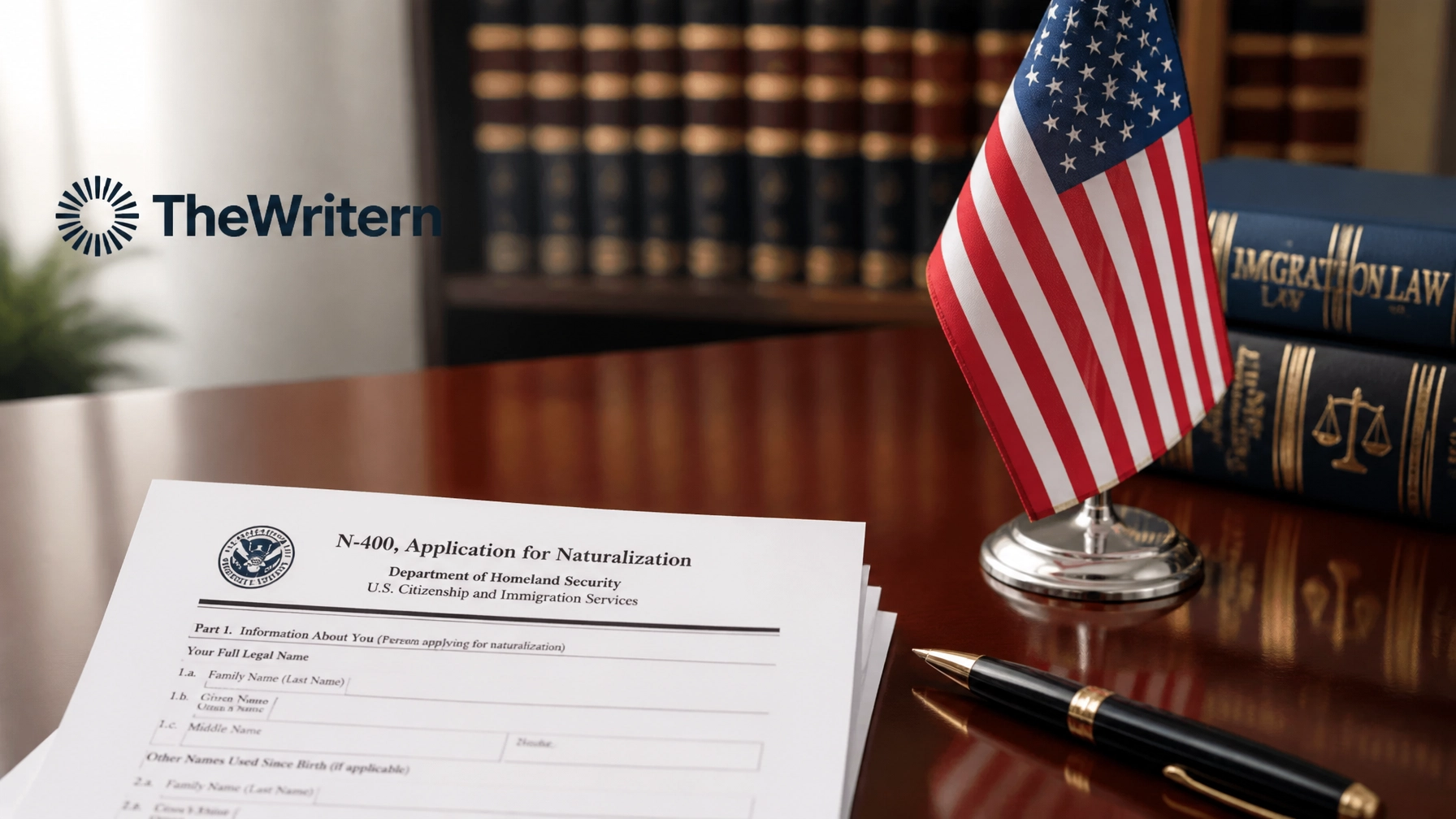
The formal process of seeking citizenship begins with the submission of Form N-400, Application for Naturalization. For 2026 applicants, U.S. Citizenship and Immigration Services (USCIS) requires the use of the 01/20/25 edition of the form. Filing an obsolete version will lead to the rejection of the filing.
Filing Fees and Documentation
The standard filing fee for Form N-400 is $760. This fee encompasses the administrative costs of processing the application and the biometrics services. Applicants must include the following primary documentation:
- A copy of both sides of the Permanent Resident Card (Form I-551).
- Proof of current legal name (e.g., marriage certificate or divorce decree, if applicable).
- Evidence of financial compliance, such as IRS tax transcripts for the preceding three to five years.
- Certified records of any arrests, citations, or court orders, even if the charges were dismissed or expunged.
Submission of the application can be executed via the USCIS online portal or through traditional mail. Online filing is the preferred method as it facilitates real-time tracking and ensures that the most current form version is utilized.

Post-Filing Procedures: Biometrics and Security Clearance
Following the submission of Form N-400, USCIS will issue a receipt notice and subsequently schedule a biometrics appointment at a local Application Support Center (ASC).
During the biometrics appointment, the applicant’s fingerprints, photograph, and signature are captured. This data is utilized by federal agencies to conduct a comprehensive criminal background check and security clearance. The purpose of this vetting is to verify the applicant's identity and confirm that they do not pose a threat to national security or public safety.
Note: Intentional omission of criminal history during the application phase that is later identified through biometrics can be interpreted as a lack of good moral character, leading to an immediate denial of the application and potential removal proceedings.
The Examination Phase: Interview and Testing
Once the background check is completed, USCIS schedules a naturalization interview. This interview is a mandatory component of the process where a USCIS officer reviews the N-400 application under oath.
The English Language Requirement
Applicants must demonstrate an ability to read, write, and speak basic English. The officer evaluates speaking ability throughout the interview. The reading and writing portions require the applicant to read one out of three sentences correctly and write one out of three sentences correctly as dictated by the officer.
The Updated Civics Test
For applications filed on or after October 20, 2025, the 2025 version of the civics test is administered. This version has been updated to include a larger bank of potential questions.
- Question Bank: 128 questions.
- Administration: The officer will ask up to 20 questions.
- Passing Score: The applicant must answer at least 12 questions correctly.
The civics test covers fundamental concepts of U.S. history and government. If an applicant fails either the English or civics portion, they are permitted one retest within 60 to 90 days. Failure at the second attempt results in the denial of the application, necessitating a new filing and fee.

The Final Mandate: The Oath of Allegiance
Approval of the Form N-400 does not grant immediate citizenship. The legal status of a U.S. citizen is only conferred once the applicant takes the Oath of Allegiance at a formal naturalization ceremony.
During the ceremony, the applicant must:
- Surrender their Permanent Resident Card (Green Card).
- Answer questions regarding any changes in their background since the interview.
- Publicly recite the Oath of Allegiance, renouncing foreign allegiances and pledging to support and defend the Constitution and laws of the United States.
Upon completion, the individual is issued a Certificate of Naturalization, which serves as the primary legal evidence of U.S. citizenship. It is recommended to update social security records and apply for a U.S. passport immediately following the ceremony.

Grounds for Denial and Compliance Risks
The naturalization process is characterized by strict regulatory oversight. USCIS may deny an application for various reasons, including but not limited to:
- Failure to Demonstrate GMC: Evidence of illegal gambling, habitual drunkenness, or failure to pay court-ordered child support.
- Tax Non-Compliance: Failure to file federal, state, or local tax returns or an existing unpaid tax liability without a formal payment agreement with the IRS.
- Voter Registration Violations: Unlawful registration to vote or voting in a federal election while an LPR.
- Selective Service Issues: Male applicants who failed to register for the Selective Service between the ages of 18 and 26.
Risk Mitigation: Applicants with complex backgrounds, such as prior criminal convictions or extended periods outside the U.S., should consult with a qualified immigration attorney prior to filing. Filing an application when ineligible can trigger an investigation into the underlying lawfulness of the applicant's permanent residency.
Professional Legal Representation
Navigating the complexities of federal immigration law requires precision and a thorough understanding of current USCIS policies. Blasingame Law LLC provides expert guidance for individuals seeking naturalization and citizenship. Our firm assists in evaluating eligibility, preparing comprehensive filing packages, and providing representation during the interview process.
For further information regarding our services, please visit our Naturalization & Citizenship Solutions page or review our Frequently Asked Questions.
If you require assistance with your citizenship application or have questions regarding your eligibility, please schedule a consultation with our legal team.